


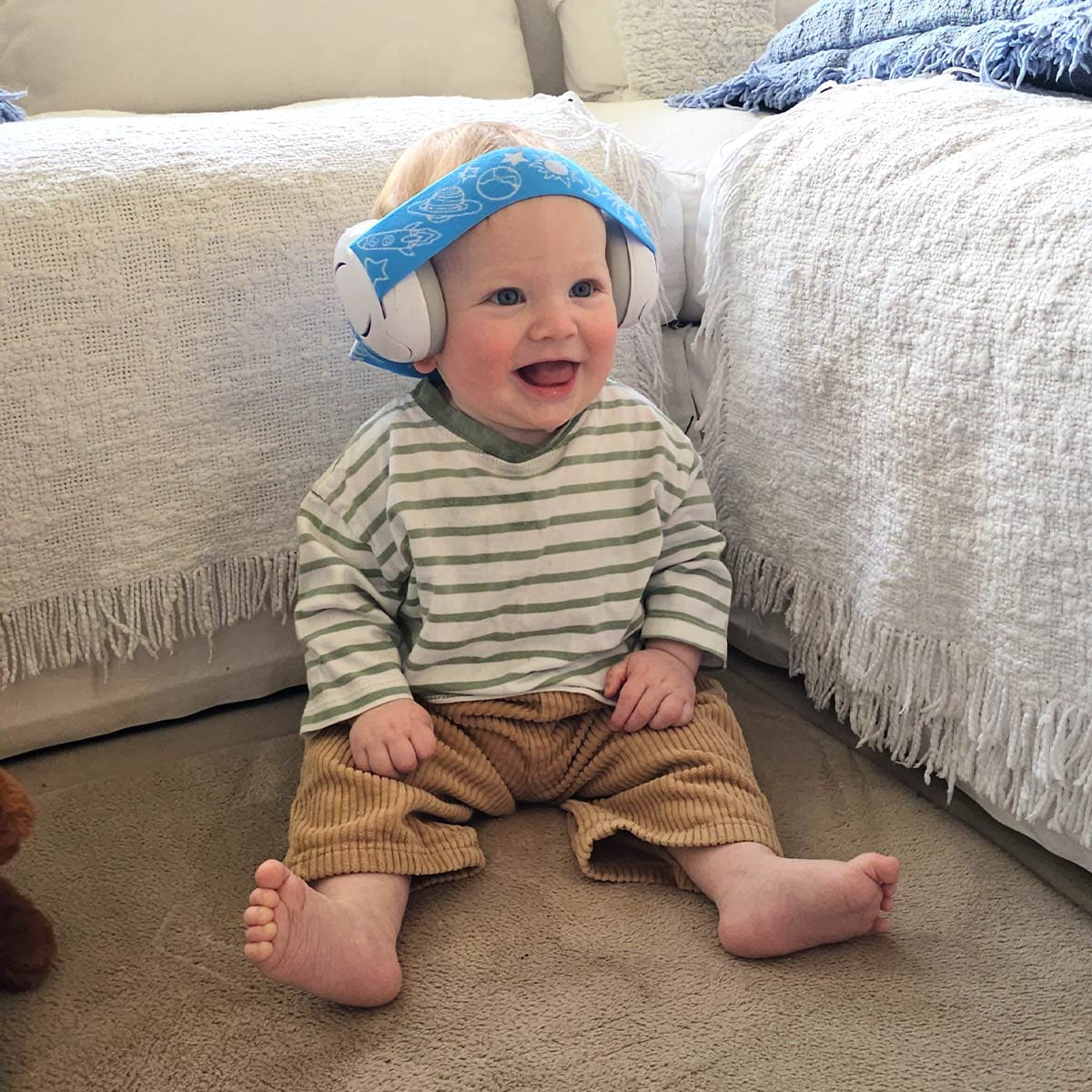
Fireworks are one of the best parts of New Year's Eve, and one of the loudest things most children will ever hear. The bangs are sudden, close together and often much louder than they seem from a distance. A good pair of ear muffs means everyone in the family can enjoy the show, including the little ones who would otherwise spend it with their hands over their ears.
This guide covers which ear protection suits each age, how to get a proper fit, and how to plan a fireworks night that works for the whole family. To see the full range, browse our hearing protection for kids and adults.
Why fireworks are hard on ears
Most everyday noise builds gradually. Fireworks are different: each burst is a sudden, sharp peak of sound, and a big display fires hundreds of them in a few minutes. Close to the launch site, fireworks can be loud enough to damage hearing, and children's ears are more sensitive than adults'.
Noise is not the only issue. Many kids find the unpredictable bangs overwhelming, even from a safe distance. Turning the volume down can be the difference between a child who loves the fireworks and one who wants to go home.
A simple test: if you need to raise your voice to be heard by someone an arm's length away, it is loud enough to protect your ears.
Which ear protection for which age?
| Who | Our pick | Why |
|---|---|---|
| Babies | Baby Ear Muffs | Sized for infants, with an SNR 25dB rating and an adjustable band for small heads. Continuous adult supervision is required while they are worn. |
| Children 2+ | Kids Ear Muffs | Sized for children aged 2 and up, with an SNR 25dB rating, cushioned cups and a carry bag. |
| Older kids, teens and adults | Ear Defenders | Noise reduction up to 27dB, a broader adjustable fit and a foldable design that slips into a bag. |
Bringing the whole family? It is worth packing a pair for each person, adults included. Parents need their ears too.
New to ear protection for babies? Our newborn ear protection guide covers fit and safety for the youngest ears in more detail.
What does SNR mean?
SNR stands for Single Number Rating. It is a standard estimate of how much a hearing protector reduces noise when it is fitted correctly. The higher the number, the more sound is reduced. Ear muffs reduce noise rather than block it completely, so your child can still hear you, and the fireworks still sound like fireworks, just softer.
How to get a good fit
Ear muffs only work as well as they fit. Before the big night:
- Fully extend the headband first, then adjust it down until the cups sit comfortably over the ears. A firm fit is normal and is what creates the seal.
- Make sure the cups cover the whole ear, with no part of the ear folded or poking out.
- Clear the seal. Tuck hair back, and remove hats, headbands or earrings that sit under the cushions. Glasses arms can break the seal too.
- Check again during the night. Kids move, cuddle and lie down, so the muffs can shift.
Plan your fireworks night
- Practise at home. Let kids wear their ear muffs for short spells in the weeks before, while watching TV or playing. If they are used to them, they are far more likely to keep them on.
- Put them on early. Fit ear muffs before the first firework, not after the first bang. Pre-show crowds, music and countdowns are loud too.
- Choose your spot. Distance is your friend. Watching from further back, or from a spot with a clear view but less crowd noise, makes a real difference.
- Have an exit plan. Know where you can step away if it all gets too much.
- Think about the littlest ones. For young babies, a big display may not be worth it. Watching on TV or from well away is a perfectly good way to see the new year in.
- Pack a bag: ear muffs for everyone, water, a favourite comfort item and something to sit on.
Not just New Year's Eve
The same ear muffs will see you through Australia Day fireworks, Christmas carols events, local shows, motorsport, concerts, sporting matches and noisy days out all year round. Keep them in the car or nappy bag so they are always on hand.
Frequently asked questions
Do babies need ear protection for fireworks?
If you are taking a baby to a fireworks display, ear muffs designed for babies are a sensible precaution, along with keeping your distance from the launch site. Baby Ear Muffs must only be worn under continuous adult supervision.
Will my child still be able to hear me?
Yes. Ear muffs reduce noise rather than block it completely, so children can still hear voices close by, especially if you speak clearly and face them.
Are regular headphones enough for fireworks?
Regular headphones are made for listening, not protection. For loud events, choose ear muffs or defenders that have a noise reduction rating, such as SNR 25dB, so you know they are designed to reduce sound.
My child refuses to wear ear muffs. What can I do?
Practise at home in short, fun sessions in the weeks before. Let them choose the colour, and wear yours at the same time. Kids are much more likely to keep them on if they are familiar and if everyone else is wearing them too.
Can kids fall asleep wearing ear muffs?
Ear muffs are designed for use while awake and supervised. If your child falls asleep after the fireworks, gently remove them once you are away from the noise.
Get ready before the countdown
The weeks before New Year's Eve are the best time to sort ear protection, so there is time to practise. Shop ear muffs and ear defenders for the whole family.
We are a retailer, not a health professional. If you have concerns about your child's hearing, speak with your GP or an audiologist.