


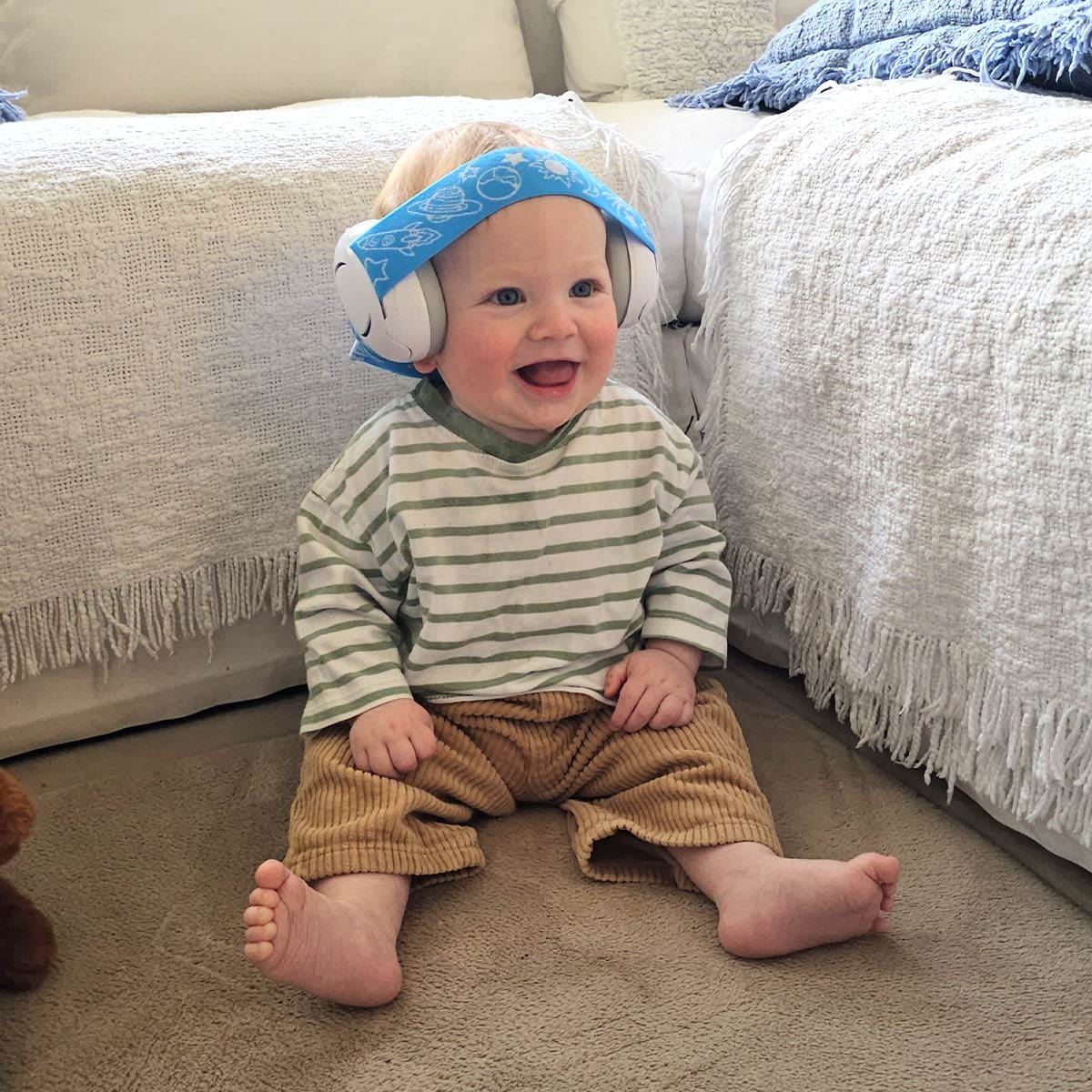
Choosing hearing protection for a baby starts with the specific model’s age guidance and fit. This guide explains what to check before buying, how to approach fitting, and when to seek professional advice.
Reduce noise exposure first
Plan for a quieter environment wherever possible. Avoid excessively noisy venues, keep away from speakers and machinery, and leave if the noise cannot be reduced. Suitable hearing protection can help reduce exposure, but does not make every environment safe.
Noise risk depends on loudness, duration and distance from the source. There is no single number in this guide that guarantees safety for a baby. Reduce exposure rather than relying on a decibel reading or earmuffs alone.
Our baby ear muff range
Our Baby Ear Muffs are part of our Hearing Protection range. Check the product information and manufacturer’s instructions for current specifications, age guidance and fit before choosing.

How to approach fitting baby earmuffs
Follow the instructions supplied with the specific model. Check its age guidance before use. The cushions should fully surround both ears and form a comfortable seal, without gaps caused by clothing or headwear.
Supervise your baby throughout use. If the fit is uncomfortable or your baby becomes distressed, move somewhere quiet before removing the earmuffs and checking the fit. Do not assume crying is simply an adjustment period.
Baby earmuffs and children’s earmuffs
Our Kids Ear Muffs have a minimum age of 3+. For younger children, check the Baby Ear Muffs product page for current age and fitting guidance. Follow the instructions for the specific model rather than choosing by appearance or age alone.
For children aged 3+ and older users, see our children’s hearing protection guide.
Common questions about newborn ear protection
At what age can babies wear earmuffs?
Check the current Baby Ear Muffs product information and manufacturer’s instructions for age guidance and fit. If you are unsure about suitability for your newborn, speak with your child health nurse or audiologist.
How loud is too loud for a baby?
Noise risk depends on loudness, duration and distance from the source. There is no single number in this guide that guarantees safety for a baby. Reduce exposure rather than relying on a decibel reading or earmuffs alone.
Can baby earmuffs be used for sleep?
We cannot confirm this model’s suitability for sleep without specific manufacturer guidance. Do not use this article as approval for sleep use. Follow the product instructions and seek advice from your child health nurse or audiologist if unsure.
For general infant sleep guidance, see Red Nose’s safe-sleep recommendations. This is general guidance, not an endorsement of earmuffs for sleep.
How long can a baby wear earmuffs?
Follow the manufacturer’s instructions for the specific model. We do not recommend a universal two-to-three-hour wear period. Check comfort and fit regularly, and move to a quieter place before removing hearing protection.
Do these work for babies who are noise-sensitive?
Responses vary. If everyday sounds cause distress or you have concerns about your baby’s hearing, speak with your child health nurse, GP or audiologist.
How should I clean baby earmuffs?
Follow the manufacturer’s cleaning instructions. Check the cushions, headband and other parts for damage before use.
Further reading
- American Academy of Pediatrics: excessive noise risks to children
- NIDCD: hearing protectors
- NIDCD: protecting your child’s hearing
Where we ship from
Orders ship from our warehouse in Taren Point, Sutherland Shire, Sydney. Orders placed before 12pm Mon-Fri usually go out same day. Standard shipping is 2-5 business days Australia-wide.
If you're a NDIS participant, eligible products can be claimed through your plan manager. We'll send a tax invoice on request.
Browse our full Hearing Protection range →
We're retailers, not healthcare professionals. For personalised advice about your baby's hearing or development, please consult your GP, maternal child health nurse, or audiologist.