


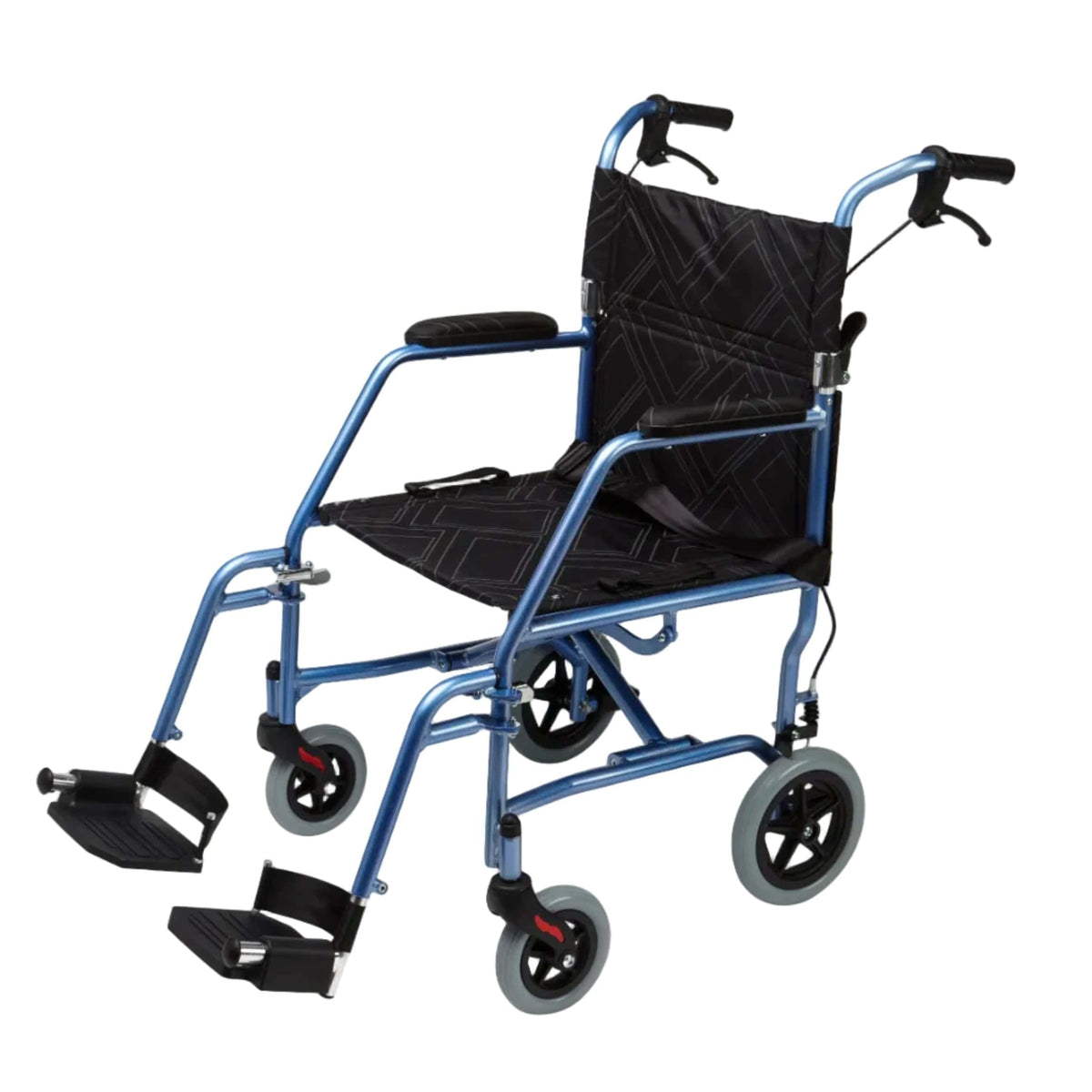
The main difference between a transit wheelchair and a self-propelled wheelchair is how it is moved. A transit chair is designed to be pushed by an attendant. A self-propelled model has larger rear wheels with push rims that the person seated can use, where appropriate for their abilities and needs.
Start with who will move the chair, then compare seating fit, controls, handling and storage. This guide uses the Max Mobility LA1 transit wheelchair and SP1 self-propelling wheelchair as examples from our Wheelchairs collection.
Transit or self-propelled: start with the daily routine
Think about the journeys the chair needs to support and who will be there. Will an attendant push it on outings? Is independent propulsion part of the intended use? Will it need to pass through particular doorways or be folded into a vehicle?
The wheel configuration provides a useful starting point, but it does not establish whether the chair suits a particular person. If you are uncertain about propulsion, posture or seating support, an occupational therapist or other appropriately qualified clinician can help assess the person and their environment.
A transit example: Max Mobility LA1
The Max Mobility LA1 Lightweight Transit Wheelchair has 8-inch rear wheels, 6-inch front castors and locking attendant brakes. Its aluminium frame has a fold-down backrest and swing-away, removable legrests. The listed maximum user weight is 125kg.
The smaller rear-wheel configuration and attendant controls distinguish this model from the SP1 below. Compare the actual controls and configuration rather than assuming every transit chair has the same features.
If lifting and storing the chair are central to your purchase, confirm the full folded dimensions and equipment weight for the supplied model. A description such as “lightweight” is not enough to establish whether someone can handle it comfortably.
A self-propelling example: Max Mobility SP1
The Max Mobility SP1 Self-Propelling Wheelchair has 24-inch quick-release rear wheels with push rims. The supplier lists an aluminium frame, full-length swing-away armrests and swing-away, removable legrests. Its maximum user weight is also 125kg.
These larger rear wheels are a clear configuration difference from the LA1. Quick-release wheels are another feature to consider when checking storage arrangements. Follow the supplied instructions for removing and refitting components.
The shared user weight limit does not make the two chairs interchangeable. The way the chair is propelled, its seating measurements and the person's support requirements remain separate checks.
Five comparisons to make before ordering
1. Seat dimensions and support
Check the exact seat width and depth, backrest dimensions, armrests and legrest configuration. These measurements describe different parts of the chair; overall width does not tell you how much sitting space is available.
Use measurements recommended for the person, rather than choosing from a product photograph or a general label such as adult, paediatric or heavy duty. Ask us to confirm a missing specification before buying.
2. Overall size on the intended route
Compare the overall chair width with the clear width of doorways and other passages it needs to use. Also consider the space required to turn and approach furniture. Seat width and folded width are different measurements from the open chair's footprint.
For a specific surface, gradient or environment, check the manufacturer's intended use and instructions. Wheel diameter alone does not confirm suitability for every outdoor route.
3. Controls and propulsion
Identify who will operate the chair and its controls. Check the exact brake and wheel arrangement on the model you are considering, and review the instructions with the person who will use it or assist.
A self-propelling product name describes a design feature. It does not guarantee that a person can propel that chair independently or that a particular setup will meet their needs.
4. Maximum user weight and equipment weight
Maximum user weight is a stated limit for the person using the chair. Equipment weight describes the chair itself. Keep these figures separate when comparing models.
For storage and loading, ask whether a quoted equipment weight includes removable components. Compare the chair as it will actually be handled, and confirm the manufacturer's limits for any accessories.
5. Folding and removable components
Record the available storage space and the opening the folded chair needs to pass through. Check folded height and depth as well as width. A single folded measurement is not a complete storage specification.
Confirm which components fold, swing away or detach, and follow the model's instructions for each step. Avoid assuming that one model folds in the same way as another chair from the same brand.
Folding for storage and occupied vehicle transport
Keep these two questions separate: will the unoccupied chair fit in the vehicle for storage, and is the exact model approved for carrying a seated occupant during vehicle travel?
A folding mechanism or the word “transit” does not answer the second question. Confirm any occupied transport approval and requirements with the manufacturer for the exact model before relying on it for that purpose.
Cushions, parts and other accessories
Check what is included with the chair before ordering additional items. A cushion or replacement component needs to suit the exact seating arrangement or model. Similar appearance is not proof of compatibility.
Our Cushions & Pillows collection and Parts & Accessories collection provide separate shopping routes. Confirm dimensions, fittings and intended use before adding an item. Where pressure care or specialist seating is required, seek individual assessment rather than choosing by material name alone.
A short wheelchair buying checklist
- Identify who will propel the chair and the support available.
- Confirm seat measurements and support requirements.
- Compare overall dimensions with the routes and spaces it needs to fit.
- Check the exact user limit, equipment weight and controls.
- Confirm full folded dimensions and removable components.
- Check accessory compatibility and the supplied instructions.
Compare the LA1 transit wheelchair and SP1 self-propelling wheelchair, or browse all wheelchairs for current models, colours, prices and availability. Contact Sensory Assist if you need a specification confirmed before ordering.
Model features checked on 27 October 2026 against current store listings and Quintro's LA1 and SP1 product information. Follow the instructions supplied with the wheelchair.