


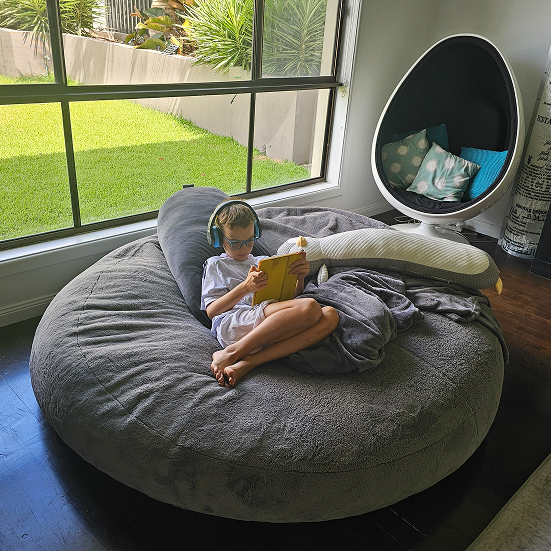

There are days when everything just feels like a bit too much. Big emotions, busy bodies, noise, transitions. It can all build up.
That’s where a calm corner can make such a difference.
A sensory space doesn’t have to be fancy, expensive, or Pinterest-perfect. It just needs to feel safe, predictable, and comforting. With a few thoughtful touches, you can create a little pocket of calm that helps children (and adults too) reset and reconnect.
Here are some simple ways to set one up at home.
Start with a quiet spot
Look for a corner that already feels a little more peaceful. It might be a nook in the living room, a corner of a bedroom, or even a small space under the stairs.
You don’t need a whole room. Just somewhere with less noise and less visual clutter. The goal is to create a space that feels different from the busy parts of the house.
Add seating that feels like a hug
Comfortable seating helps the body settle.

Our Sensory Pod Beanbag is a favourite for calm spaces. Its cocoon-like shape creates a gentle sense of enclosure, almost like a hug around the body. It’s perfect for reading, quiet time, or simply taking a break after a big day.
If your space allows for it, a sensory swing is a popular addition. Kids can swing, spin, or curl up inside — many families say it becomes their child's favourite spot in the house.
For older children, teens and adults who love movement, a Sensory Egg Chair with Light and Speakers can also create a cosy, supportive retreat while still allowing gentle motion.
Layer in softness
Soft textures instantly make a space feel more inviting.
A plush mat or rug can completely change the feel of a corner. Our Mellow Mat is beautifully soft underfoot and adds warmth to any space. It creates a comfortable base for stretching out, lying down, or curling up with a book.
You might also add a Weighted Blanket for gentle deep pressure during quiet time. Many families tell us this becomes the go-to item when someone needs to feel grounded and calm.
Include gentle sensory input

A calm space doesn’t have to mean completely still.
Some children regulate best with subtle movement or visual input. Liquid Floor Tiles are a lovely addition. Stepping on them creates slow, flowing colour patterns that are soothing to watch and grounding for busy feet.
Small fidgets like Knot Balls or Stress Eggs can also provide quiet, repetitive input that helps the body unwind.
Keep it simple
Less is more.
A calm corner works best when it feels intentional, not overwhelming. Choose just a few items that truly support regulation. Soft lighting, one or two sensory tools, and a comfortable seat are often all you need.
Too many options can feel overstimulating, which is the opposite of what we’re trying to create.
Make it personal

Every person’s sensory needs are different.
Some children love deep pressure. Others prefer movement. Some feel safest with a favourite plush nearby. Let your child help choose what goes into their calm space. Ehether it’s a Cooling Weighted Teddy, a favourite book, or a specific colour they feel drawn to.
When they feel ownership over the space, they’re more likely to use it.
A small space can make a big difference
Creating a sensory space at home is really about sending a message:
“It’s okay to take a break. It’s okay to reset.”
With a few simple, supportive tools, you can create a space that helps everyone in your home feel calmer, more regulated, and more connected.
If you’d like to explore tools that work beautifully in calm corners, you can browse our full range here: