


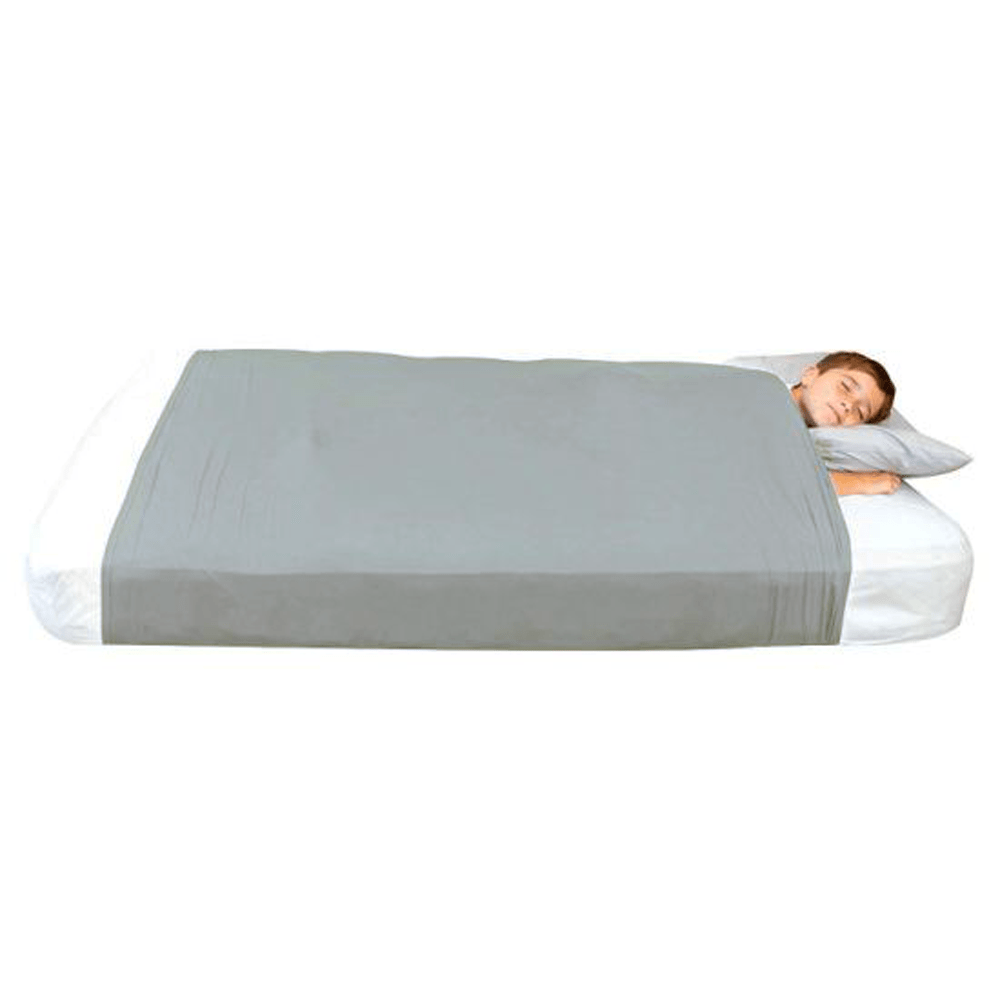
Compression sheets are bed sheets engineered to wrap around the body like a gentle hug. They use stretchy lycra-style fabric that holds the sleeper in steady, calming pressure all night — no straps, no extra weight, no clasps. Customers tell us they're one of the most-effective single changes you can make for restless sleepers, sensory-sensitive kids, and anyone who finds traditional flat sheets too loose.
How compression sheets work
A standard fitted sheet sits on top of the mattress and the sleeper rests on it. A compression sheet is different — it stretches over the sleeper, between them and the doona, so the body is gently held all night. Two ways to think about it:
- Like a giant body sock for sleep. Same calming-pressure principle as a Lycra body sock, but designed to stay in place overnight without active wearing.
- Like a weighted blanket without the weight. The sheet provides steady, even pressure across the whole body — similar calming feel, but without 4-9kg of glass beads on top.
Our two compression products
We stock two products that share this design idea, used in different ways:
- Sensory Compression Sheets — the full-bed sheet version. Goes between the bottom sheet and the doona; stretches over the whole body. Best for overnight sleep use, all ages.
- Lycra Bed Sock — a stretchy "footie" version that wraps just the legs and lower body. Good for kids who don't want full coverage, or for adults who want compression at the legs only (helps with restless legs).
Who uses compression sheets?
- Sensory-sensitive kids who settle better when they feel "held" through the night.
- Restless sleepers who toss and turn, partially because they don't feel anchored.
- Adults with anxiety or insomnia who want a calming, non-pharmaceutical sleep aid.
- Side sleepers and starfish sleepers who don't want to feel exposed when the doona slides off.
- Anyone who's tried weighted blankets and found them too hot or too heavy. Compression sheets give similar settling without the weight.
- Hot sleepers — the sheets are lightweight and breathable; pair with our Chill Blanket for summer.
Compression sheet vs body sock vs weighted blanket
Three products that all use calming pressure to help the body settle, but each serves a different scenario:
- Compression sheet — overnight, bed-bound, full body. Set-and-forget.
- Body sock — daytime, wearable, full-body cocoon. See our Body Socks Australia guide.
- Weighted blanket — overnight, on top of the body, adds 4-9kg of weight. See our Weighted Blankets Australia guide.
Many customers own more than one — body sock for daytime sensory regulation, compression sheet for overnight calm, weighted blanket for the deepest pressure when they want it.
How to set up a compression sheet
- Strip the bed back to the bottom sheet. Remove your existing flat sheet or quilt cover.
- Stretch the compression sheet over the mattress and around the foot of the bed. The sleeper goes underneath this sheet, between it and the bottom mattress sheet.
- Layer your doona or weighted blanket on top. The compression sheet doesn't replace your warmth layer — it adds the calming-pressure layer.
- Test the tension. The sheet should feel snug but not restrictive. Most kids and adults adjust within a night or two.
- Choose the right size. Match to your mattress — single, double, queen, king. The sheet works best when it's the right fit; too loose loses the pressure, too tight gets uncomfortable.
Common questions about compression sheets
Are compression sheets safe for kids?
Yes — they're designed for use across the whole age range from older toddlers up. We don't recommend them for babies or under-3s due to general bedding safety guidelines. For younger children, supervised use only and check the fit isn't too tight around the chest.
Are compression sheets hot to sleep under?
The fabric is lightweight and breathable — much cooler than weighted blankets. Hot sleepers often tolerate compression sheets better than weighted bedding for this reason. For really hot Australian summer nights, pair with a cooling blanket.
Will a compression sheet help with restless sleep?
Customers consistently tell us yes — the calming pressure reduces the tossing and turning that breaks up sleep cycles. We don't make clinical claims, but it's one of our most-recommended products for partners or parents wanting a settled night.
How do I wash a compression sheet?
Machine washable on cold, gentle cycle. Air-dry or low-heat tumble — the lycra fibres don't tolerate high heat over time.
Are compression sheets NDIS funded?
Many NDIS plan managers will fund compression sheets as low-cost assistive technology, particularly for participants with sensory processing or sleep concerns. We're no longer NDIS registered, but you can purchase from us and claim through your plan manager. We'll send a tax invoice on request.
What pairs well with a compression sheet?
Most-common combos: compression sheet plus a regular doona (most common); compression sheet plus a weighted blanket on top (deepest calming layer); compression sheet plus a cooling blanket for summer; compression sheet plus a memory foam pillow for a complete sleep-routine reset.
Where we ship from
Both compression products ship from our warehouse in Taren Point, Sutherland Shire, Sydney. Standard shipping is 2-5 business days Australia-wide. Orders placed before 12pm Mon-Fri usually go out same day. Sutherland Shire locals can arrange warehouse pickup.
Browse related categories: Calming & Sleep Tools, Body Socks, Weighted Range.
We're retailers, not healthcare professionals. For personalised advice on sleep or sensory support, please consult your occupational therapist, GP, or healthcare provider.