


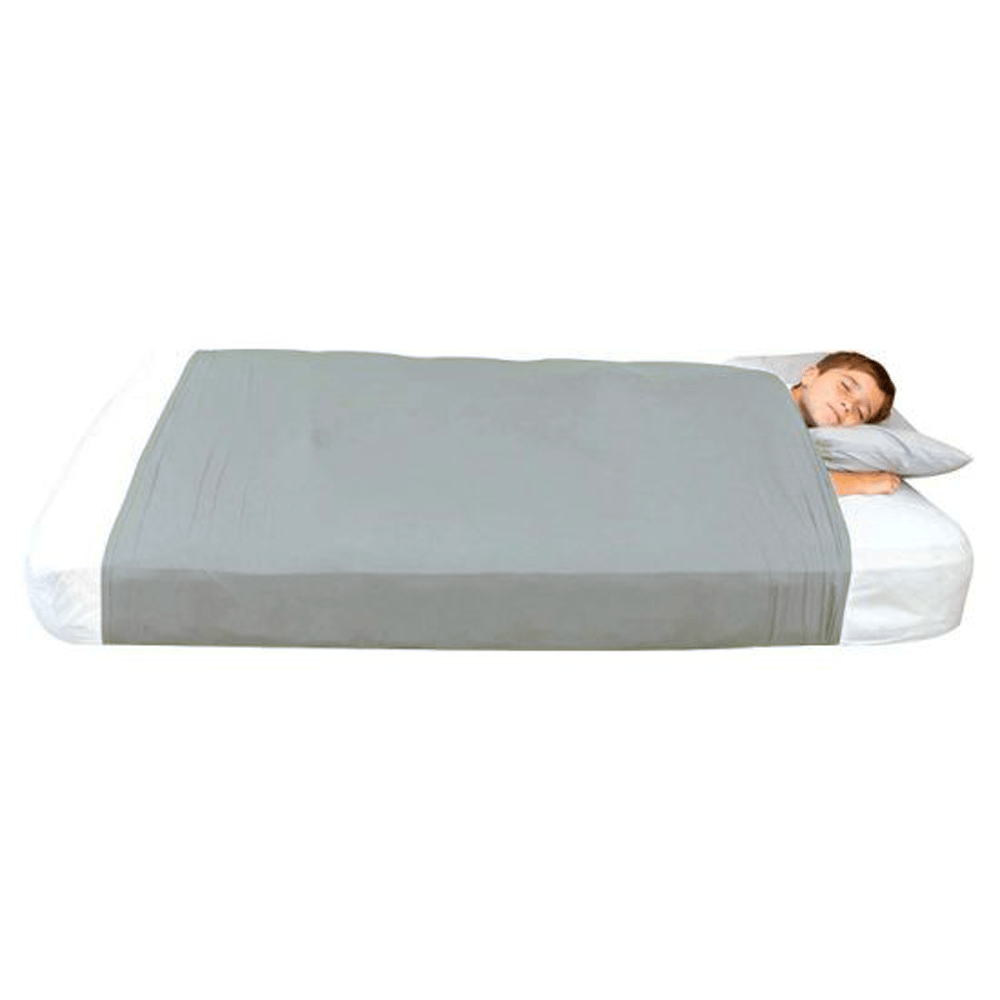
Choosing a compression sheet sounds simple — pick a size and check out — but the small decisions matter. Material, sizing, tension, and how it pairs with the rest of your bedding all change how well the sheet works. This guide walks through what to look for so you end up with a sheet you'll actually use every night.
Material: lycra blends do most of the work
Compression sheets need to stretch in all directions and recover their shape after each use. The standard fabric is a lycra-cotton or lycra-polyester blend — usually 80-90% cotton or polyester for breathability with 10-20% lycra (or elastane) for the stretch.
Things to look for:
- Four-way stretch. Two-way stretch fabrics lose their shape over time. Four-way stretch holds the calming pressure for years.
- Breathability. A high cotton or bamboo content keeps the sheet cool — important for Australian conditions.
- Recovery. Quality lycra springs back to size after washing. Cheaper sheets can sag after a few washes.
- Hypoallergenic finish. If you or your child has skin sensitivities, look for sheets that don't use harsh dyes.
Sizing: match the bed exactly
Compression sheets need to fit the mattress dimensions, not just be "close enough." A queen sheet on a king bed is too loose and loses the calming effect; a single sheet on a king double makes the sleeper feel uncomfortably squeezed.
Most beds in Australia fit one of these:
- Single (King Single) — most kids' beds and single-sleeper guest beds.
- Double — smaller couple beds or a generous solo sleeper.
- Queen — the most common couple bed.
- King / Super King — larger couple beds, often with two adults plus pets or kids.
Measure your mattress before ordering — the size on the label and the actual measurements sometimes differ slightly between brands.
Benefits customers tell us about
- Faster wind-down at bedtime. The calming pressure helps the body relax into sleep position.
- Fewer wake-ups overnight. Steady, even pressure throughout the night reduces tossing and turning.
- Less restless leg movement. Particularly noticeable for adults with restless legs.
- Calmer sensory-sensitive kids. The "held" feeling helps kids who normally fight sleep settle into the routine.
- Cooler than a weighted blanket. Same calming-pressure benefit, much cooler against the skin.
- No straps or attachments to manage. Set up once at bed-make time, no extra step at bedtime.
What to pair it with
The compression sheet works as a layer in a wider bedding setup:
- Bottom mattress sheet in breathable cotton or bamboo.
- Compression sheet stretched over the sleeper.
- Doona, weighted blanket, or cooling blanket on top depending on the season.
- Quality memory foam pillow — see our pillow guide.
Many customers layer a Chill Blanket on top of the compression sheet in summer, and a weighted blanket in winter. The sheet stays the same year-round.
Common questions about choosing a compression sheet
How tight should a compression sheet feel?
Snug, not restrictive. You should be able to roll over comfortably. If it feels like the sheet is squeezing your chest, it's the wrong size — go up one.
Will a compression sheet replace a weighted blanket?
For some sleepers, yes — the calming pressure is similar. For others (particularly people who specifically want the heaviness sensation), no. Many customers own both and choose based on the night.
How often should I replace a compression sheet?
Quality compression sheets last 3-5 years of nightly use. Watch for the lycra losing recovery (sheet sags or feels less snug) — that's the signal to replace.
Can compression sheets be used during pregnancy?
Many pregnant customers use them. Check with your midwife or GP about pressure on the abdomen, particularly in the third trimester.
Are compression sheets NDIS funded?
Many NDIS plan managers will fund compression bedding as low-cost assistive technology, particularly for participants with sensory or sleep concerns. We're no longer NDIS registered, but you can purchase from us and claim through your plan manager.
Where do I see the full range?
See our complete compression sheets guide for the cornerstone overview, or browse Calming & Sleep Tools for the full sleep range.
Where we ship from
Compression sheets ship from our warehouse in Taren Point, Sutherland Shire, Sydney. Standard shipping is 2-5 business days Australia-wide.
We're retailers, not healthcare professionals. For personalised advice on sleep or sensory support, please consult your GP or occupational therapist.