


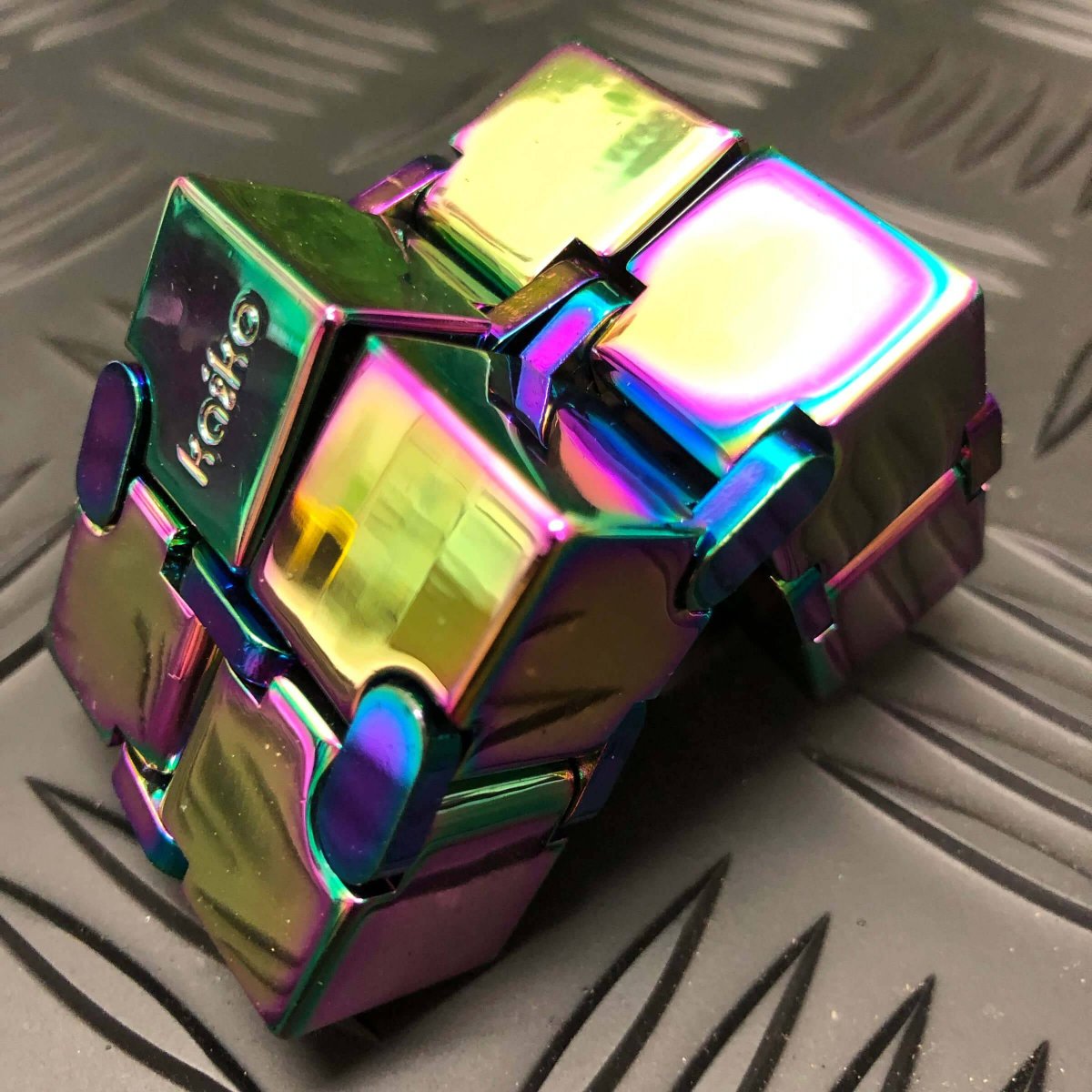

"Sensory toys" covers a huge range of products — from the Kaiko infinity cube a teenager flips in class to the weighted bean bag an adult sinks into after work. If you've seen the term and wondered what actually counts as a sensory toy, who they're for, and which ones are worth buying, this guide is for you. We've been selling sensory products to Australian families since 2017, and this is our plain-English walk-through of what we stock and why customers keep coming back.
What is a sensory toy?
A sensory toy is any product designed to engage one or more of the senses — touch, sight, sound, movement, or the body's sense of pressure and position. The point isn't entertainment in the traditional sense; it's giving the hands (and sometimes the whole body) something organised to do. Our customers buy them for:
- Focus — fidgets help some people concentrate in class, at work, or on long calls
- Calming — weighted products, bean bags and squishy textures help with winding down
- Play — tactile toys, visual toys and chew products genuinely engage kids who don't love traditional toys
- Oral motor support — chew necklaces give heavy chewers something safe to chew on instead of shirts, pencils, or fingernails
- Gift-giving — a well-chosen sensory toy is a thoughtful present for a kid, a teen, or an adult who's hard to buy for
A quick honest note: we're retailers, not clinicians. Sensory toys aren't a medical treatment. What we can tell you is what thousands of Australian customers actually buy them for, and which of our products tend to come back in the best reviews.
The main categories (with where to buy)
1. Fidgets and hand toys
The category most people picture when they hear "sensory toy". Fidgets are small hand-held items for idle hands — they discharge nervous energy quietly. Good at school, at meetings, on planes, and anywhere sitting still is hard.
- Browse all fidget toys
- Kaiko fidgets — Australian-owned brand; our bestselling infinity cubes and caterpillar fidgets come from them
- SPEKS magnetic fidgets — the ones adults buy for their desk
- Schylling Nee-Doh stress balls — squishy classics that hold up
- All stress balls
See our Best Fidget Toys Australia guide for the full run-down on picks by age and style.
2. Chew pendants and oral motor tools

For chewers of all ages — kids, teens, adults. A safe, food-grade silicone pendant gives the jaw something to work on instead of shirt collars, pencils, or fingernails. Worn like a normal necklace, nobody has to know what it's for unless you tell them.
- All chew necklaces and oral motor tools
- Jellystone Designs chew pendants — our most popular brand in this category
- Best Chew Necklaces Australia guide
3. Weighted toys and blankets
Weighted products use gentle, even pressure to create a calming, grounding feeling. Customers use them for winding down, for focus at a desk, and at bedtime.
- All weighted toys and blankets
- Weighted lap pads — portable weight for desks, classrooms and travel
- Weighted plush toys (heatable)
- Our full Weighted Blankets Australia guide
4. Mats, rugs and tactile surfaces
Floor products for tactile play, calm corners and sensory rooms at home. The Mellow Mat is our bestselling item in this category — memory foam that feels like you're stepping on a cloud.
- Mellow mats and memory foam mats
- All mats and rugs
- Liquid floor tiles — visual + tactile, a crowd-pleaser
5. Body socks and compression
Stretchy lycra body socks give the whole body gentle compression — popular with kids who seek deep pressure and like to crawl around in them. Adults use compression sheets for similar reasons at bedtime.
- Body socks (we're #1 in Australia for this category)
- Sensory compression sheets guide
6. Active seating
Wobble cushions, spinning chairs and wobble stools let kids (and adults) move while they sit. Popular in classrooms and home desk setups.
- Active seating range
- Wobble cushion — we rank #1 in Australia
- Swivel balance chair / sensory spinning chair
7. Sleep and comfort
Weighted sleep masks, sleep lamps, mattress toppers, pillows — the sensory products that get used at the end of the day.
8. Hearing protection
Ear defenders and ear muffs for sound-sensitive kids (and adults). Huge category for us — babies, kids and noise-cancelling adult styles.
9. Visual and tactile toys
Bubble tubes, fibre optic lights, liquid timers, squishy toys, stretch toys — the "looks fun" end of the category. Great for calm corners, sensory rooms, and little hands.
Sensory toys by age group
Babies (0–12 months)
Soft textures, safe-to-mouth shapes, gentle rattles, and teethers. Nothing with small parts, nothing weighted. Our Jellystone teethers are a good starting point — see our full guide to sensory toys for babies 0–12 months. Also useful: our guide to teething toys for soothing gums, and our buyer's guide to newborn ear protection.
Toddlers (1–3 years)
Tactile play, simple cause-and-effect toys, larger chew shapes, body socks. Avoid small fidgets with removable pieces at this age. Two reads worth bookmarking: our guide on the importance of tactile play in child development, and how to use the Rainbow Stacker and Teether for sensory play.
School-age kids (4–11 years)
Classroom-friendly fidgets, chew pendants, wobble cushions, body socks, visual timers, and pencil grips. See our Best Sensory Toys Australia 2026 picks. Reading helpers and classroom tools: our guides to enhancing focus while reading and the difference between sensory toys and sensory tools for schools.
Teenagers (12–17 years)
Discreet fidgets (infinity cubes, SPEKS), chew necklaces designed to look like jewellery, noise-cancelling ear defenders. The trick is choosing products that don't look like "medical" items. For SPEKS specifically, see our ideas for using SPEKS Solids and tips for using SPEKS Luxe.
Adults
Desk fidgets, weighted lap pads, weighted blankets, acupressure mats, sensory pods, sensory bean bags, compression sheets, weighted sleep masks. Sensory products for adults is a fast-growing category for us.
- Adult sensory products
- Sleep tools: how the Sleep Lamp III helps with sleep quality
- Ergonomics: using a back stretcher and posture corrector for everyday well-being
Key brands we stock
- Neptune Blanket — weighted blankets, mellow mats, acupressure, sleep (65+ products)
- Kaiko — Australian-owned fidgets and hand tools (infinity cubes, caterpillars)
- Jellystone Designs — food-grade silicone chew pendants and teethers
- Schylling — Nee-Doh stress balls and classic fidget lines
- SPEKS — magnetic fidget balls, desk fidgets for adults
- Moluk — open-ended Swiss sensory toys
- Sensory Assist — our own range of sensory products (body socks, therapy swings, hammocks)
How to choose a sensory toy
A few questions to ask before buying:
- Where will it be used? Classroom-friendly means quiet, discreet, and not a distraction. Home use has more freedom.
- What does the user actually seek? Chewing, squishing, spinning, weight, stretching — most people have a strong preference.
- How durable does it need to be? Heavy users destroy cheap fidgets. Investing in a Kaiko or SPEKS pays off.
- Any sensitivities to avoid? Some users hate noise (so no clickers); some hate latex (so check materials); some hate strong smells.
- Gifting vs personal use? Gifts benefit from broader appeal — things like stress balls, infinity cubes and weighted lap pads are safer choices than specialty items.
Customer favourites — what actually sells
Based on what flies out of our Taren Point warehouse:
- Kaiko Infinity Cube Fidget — we rank #1 in Australia for "infinity cube"
- Acupressure Mat — #1 in Australia for "acupressure mat"
- Wobble Cushion — #1 in Australia for "wobble cushion"
- Sensory Pod (sensory bean bag) — #1 for "sensory pod"
- Body Socks — #1 for "body sock"
- Weighted Lap Pads — #1 for "weighted lap pad"
NDIS, shipping and returns
- NDIS: around 40% of our customers use NDIS funding. We're not a registered provider (changed in 2025), but plan-managed and self-managed participants can purchase from us and claim through their plan manager. We issue proper tax invoices with every order.
- Shipping: Australia-wide, dispatched from Taren Point (Sutherland Shire, Sydney). Most orders arrive in 3–7 business days.
- Warehouse pickup: available from Taren Point by arrangement — not a retail showroom, but happy to meet local customers.
- Returns: 14 days from receipt. Customer pays return shipping.
Frequently asked questions
Are sensory toys only for kids with additional needs?
No. Fidgets, weighted products and sensory tools are used by a huge range of people — kids, adults, office workers, shift workers, students. We sell to all of them.
What's the difference between a sensory toy and a regular toy?
Mostly intent. A sensory toy is designed to engage a specific sense — touch, pressure, movement — rather than tell a story or teach a skill. The lines blur (a good squishy ball is both), but that's the general distinction.
What are the best sensory toys for a beginner?
A stress ball, a Kaiko infinity cube, or a weighted lap pad are low-risk first purchases. All three work for a wide range of ages and preferences.
Where can I buy sensory toys in Australia?
You're already here — we ship Australia-wide from Sydney. For local Sutherland Shire customers, warehouse pickup is available. Browse the full range or the fidget toys and weighted products collections to get started.
Next steps
Not sure where to start? We've written guides for the most-asked-about categories:
- Best Fidget Toys Australia
- Weighted Blankets Australia: Complete Guide
- Best Chew Necklaces Australia
- Best Ear Defenders for Kids
- Body Socks Australia
- Acupressure Mats Australia
- Sensory Swings Australia
We're retailers, not healthcare professionals. For personalised advice about sensory needs, please consult your occupational therapist or healthcare provider.